
Drivers need fast help when batteries die, tires go flat, or doors lock. Commuters, delivery drivers, and travelers create steady demand. A mobile roadside business can meet it without owning a tow truck.
What is a roadside assistance business without towing?
A non-towing roadside assistance business helps drivers solve minor vehicle problems without moving their cars to a repair shop. Local weather can shape the type of help needed, from a jump start in Phoenix after prolonged summer heat to battery assistance in Chicago during a winter cold snap.
Other common services include flat tire changes, car lockouts, emergency fuel delivery, and basic OBD2 diagnostics. Many of these jobs require only a reliable vehicle and essential tools, making roadside assistance an accessible business for solo operators and small teams.
Top roadside assistance business ideas
- Battery jump-starts. Use a portable booster and follow the vehicle maker’s instructions.
- Flat tires. Fit a spare or inflate a tire when safe. Many newer cars and electric vehicles have no spare.
- Fuel delivery. Carry approved containers and supply enough fuel to reach a station, where permitted.
- Lockout assistance. Use non-damaging tools and verify the customer’s right to enter the vehicle.
- Mobile diagnostics. Read fault codes and refer complex problems to qualified repair shops.
Electric vehicles also need tire, lockout, and 12-volt battery services. High-voltage battery work requires specialists. A vehicle with a depleted traction battery may need mobile charging or a tow.
How to start a roadside assistance business: step by step
- Research local rules. Check business licenses, roadside safety rules, fuel transport permits, and restrictions on lockout work. Requirements vary by location.
- Choose services. Start with a few reliable options. Define a service area based on travel time, demand, and local competition.
- Step 3: Register the business. Choose a sole proprietorship or LLC, register the name, get an EIN when required, and open a business bank account.
- Get insurance. Review general liability, commercial auto, equipment coverage, and workers’ compensation where required. Confirm coverage for roadside calls.
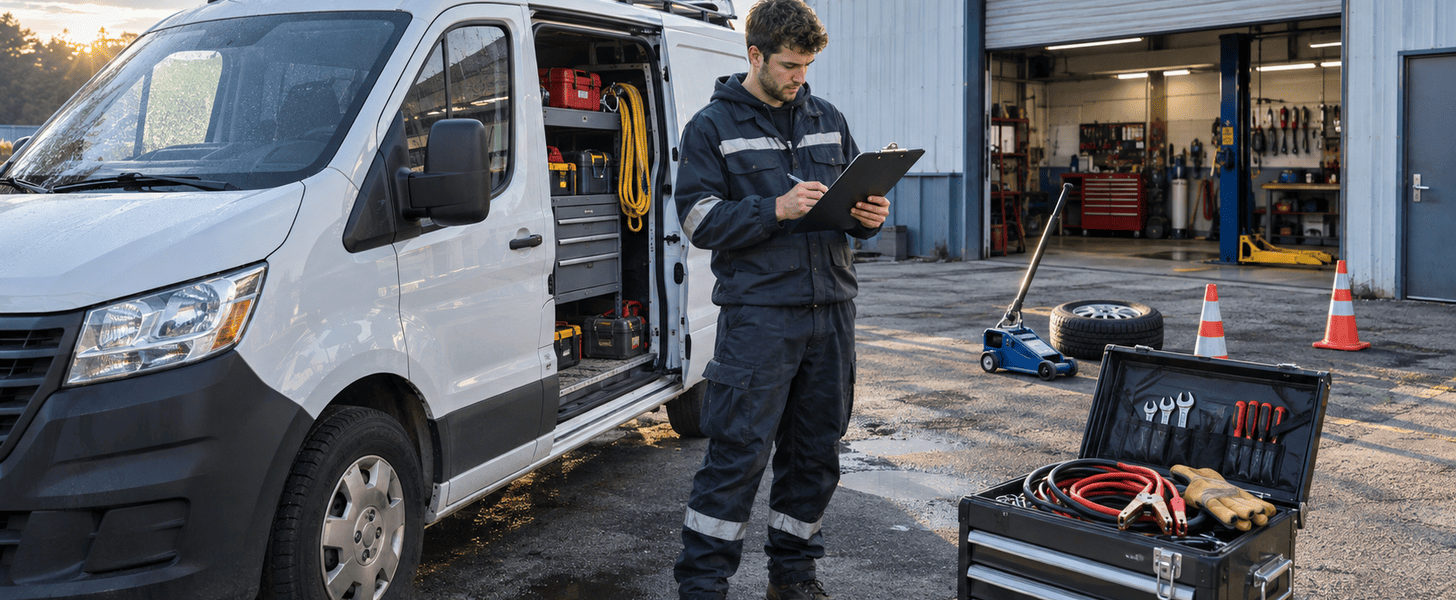
- Buy tools and a vehicle. A car, SUV, or van can carry a jump starter, jack, lug wrench, inflator, lockout kit, OBD2 scanner, approved fuel cans, gloves, and flashlight. Add high-visibility clothing and appropriate warning equipment.
- Set prices. Include labor, mileage, fuel, equipment, and insurance. Show callout fees and after-hours charges before dispatch. Consider packages or memberships.

Use a low-cost roadside assistance business app
A booking app can handle customer requests, live location sharing, arrival updates, secure payments, job records, and reviews. White-label apps and no-code tools can lower setup costs. A mobile-friendly website and simple dispatch software may be enough at first. Keep customer and payment data secure.
Cost breakdown and profit potential
A lean non-towing startup may cost $1,500–$3,000 if a suitable vehicle is already available. However, insurance, permits, tools, and software can raise costs. Service prices of $40–$70 are sample figures, not universal rates.
Profit depends on completed calls, drive time, fuel, and repeat bookings. Track revenue per job, customer acquisition costs, and response times. Keep funds available for repairs and quiet periods.
Marketing a roadside assistance business
Build a website and Google Business Profile with accurate hours, services, and coverage areas. Service-area businesses without a storefront should hide residential addresses. Use local SEO, customer reviews, social ads, and phrases such as “roadside assistance near me.” Partner with garages, dealers, delivery companies, and fleet managers.
Final tips for long-term success
Respond quickly, explain prices clearly, and send arrival updates. Prioritize worker safety near traffic and avoid unsafe roadside repairs. Train technicians, track service quality, and collect feedback. Membership plans and fleet contracts can bring repeat work. Expand the team only when demand and service standards support growth.